Pilot Activities

Effective eco-restoration and sustainable development within the Aravalli region fundamentally hinge upon robust capacity building for all crucial sector partners. This initiative is designed to empower stakeholders by enhancing their knowledge, cultivating essential practical skills, and strengthening the institutional frameworks necessary for the long-term success and resilience of environmental interventions. Acknowledging that the success of any landscape-scale project depends on a collaborative effort, a key initial step involves effectively onboarding important sector partners.
Why
Bridge knowledge gaps and promote sustainable behaviours
Whom
Villagers, panchayats, students, govt. Officials etc
What
  1. Awareness session
  2. Skill training
  3. Storytelling
  4. Campaigns
  5. Demonstration etc.
How
Local experts/ Facilitated Training -forest dept., NGOs, peer learning etc
When
Based on seasons (e.g. monsoon for plantations), evening/morning slots
Outcome
Behaviour change, replicating best practices, community ownership
Effective eco-restoration and sustainable development within the Aravalli region fundamentally hinge upon robust capacity building for all crucial sector partners. This initiative is designed to empower stakeholders by enhancing their knowledge, cultivating essential practical skills, and strengthening the institutional frameworks necessary for the long-term success and resilience of environmental interventions. Acknowledging that the success of any landscape-scale project depends on a collaborative effort, a key initial step involves effectively onboarding important sector partners.
Stakeholder Group Key Indicative Training Areas
Forest Department Frontline Staff
  • Ecological literacy
  • Practical restoration and management techniques (Assisted Natural Regeneration, invasive species control, soil and water conservation)
  • Watershed management
  • Nursery and arboretum management
  • Wildlife coexistence
  • Eco-tourism guiding
  • Training of Trainers (ToT)
  • Data collection and Ecosystem Health Card monitoring framework
  • Green livelihoods and enterprise promotion
  • Biodiversity management and assessment
  • Ecosystem approach
JFMC / Local Panchayat Member / BMC
  • Role in eco-restoration
  • Basic Aravalli ecology
  • Community mobilisation and participatory planning
  • Government livelihood schemes
  • Conflict resolution
  • Local reporting
DFO and Above (Forest Department)
  • Advanced policy and legal frameworks
  • Inter-departmental coordination
  • Financial mechanisms and resource mobilisation
  • Ecosystem approach
  • Project planning and adaptive management
  • Monitoring and evaluation for impact assessment
  • Addressing institutional gaps (JFMCs / Van Samitis)
  • Modern techniques in biodiversity conservation and assessment
Farmer / Community Representative
  • Sustainable agricultural practices
  • Native species propagation and agroforestry
  • Value addition from forest produce
  • Soil and water conservation techniques
  • Access to financial schemes
  • Community participation in restoration
FPO (Farmer Producer Organisation)
  • Sustainable supply chain development
  • Market linkages and enterprise development
  • Access to finance for green enterprises
  • Quality control and certification
  • Business management and marketing
  • Promoting sustainable practices among members
Representative – Line Departments
  • Integrated landscape approach
  • Synergy in programme implementation
  • Data sharing and joint planning
  • Understanding Environmental Impact Assessments
  • Sustainable resource management policies
  • Rainwater harvesting
  • Water reuse
  • Watershed approach
  • Ecosystem services
Mapping stakeholders along with indicative training arenas for target interventions

A comprehensive, one-day ‘Capacity Building Workshop on Eco-Restoration and Biodiversity Conservation’ was held, combining classroom sessions with extensive field practical. The programme was strategically located at a training centre within the Aravallis in Bhondsi, Gurugram district, leveraging the local forest for invaluable practical demonstrations. The workshop was attended by a total of over 50 stakeholders, including approximately 25 frontline Forest Department staff (comprising Forest Guards, Foresters, and Deputy Rangers from the Gurugram district and surrounding operational areas) as well as representatives from various nurseries, local NGOs, and Biodiversity Management Committee (BMC) members. The training was facilitated by a diverse team of subject matter experts.
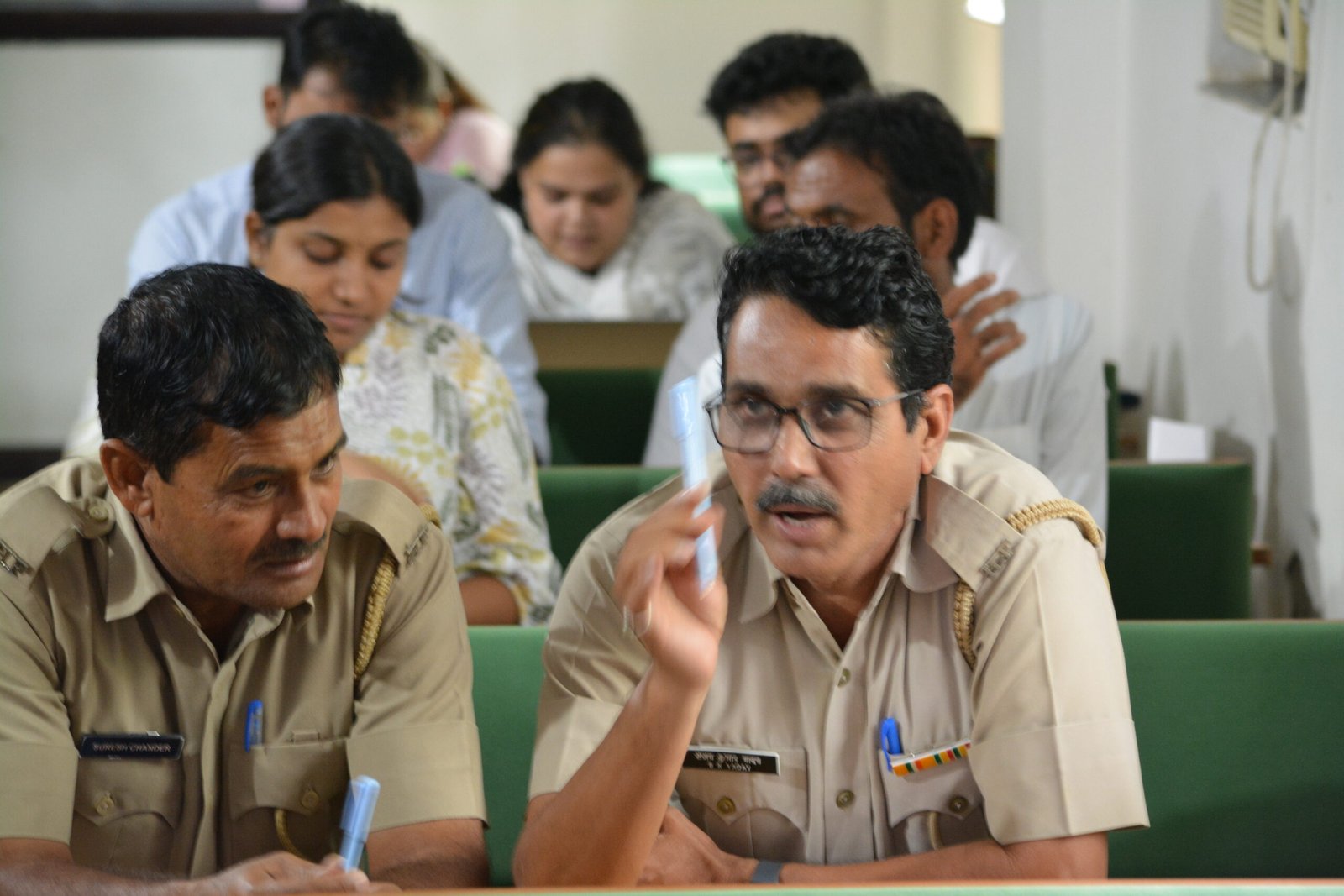
Front like office staff along with other stakeholders attending the capacity building session organised at Bhondsi Nature Camp, Gurugram on 6 August 2025
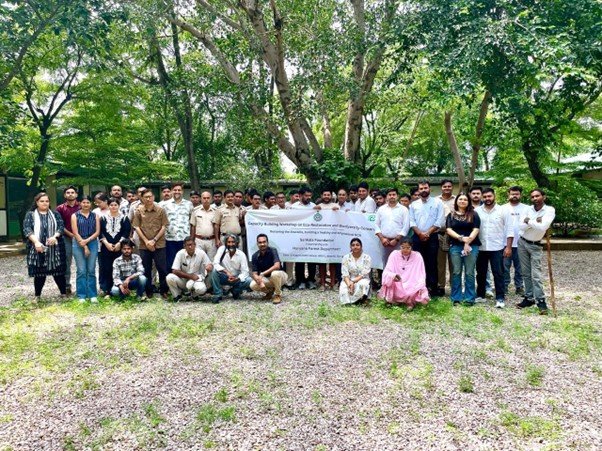
Conclusion of the Capacity Building Training Program with Sankala team and all the participating stakeholders conducted on 6 August, 2025
A pilot intervention was successfully conducted in one school in each of the selected four villages within the Aravalli region. These practical awareness workshops, held on the 4th and 5th of August 2025, focused on environmental awareness, waste management, and the principles of Mission LiFE. The participating schools were GMS Sakatpur and GSSS Gairatpur Bas on the first day, and GSSS Shikohpur and GMS Naurangpur on the second. This pilot aimed to test the effectiveness of the ‘Sustaining the Aravallis: A Community-Led Environmental Awareness and Waste Management Initiative’ roadmap and gather crucial insights for future replication.

Key Activities Conducted

The pilot intervention encompassed a series of structured and interactive activities, ensuring a seamless flow from education to action, all led by a team of dedicated experts.
  1. Strategic Planning & Mobilisation: The process began with identifying key stakeholders, including the principals of the four schools and village leaders (Sarpanches). This was followed by the development of essential Information, Education, and Communication (IEC) content and materials for the practical activities.
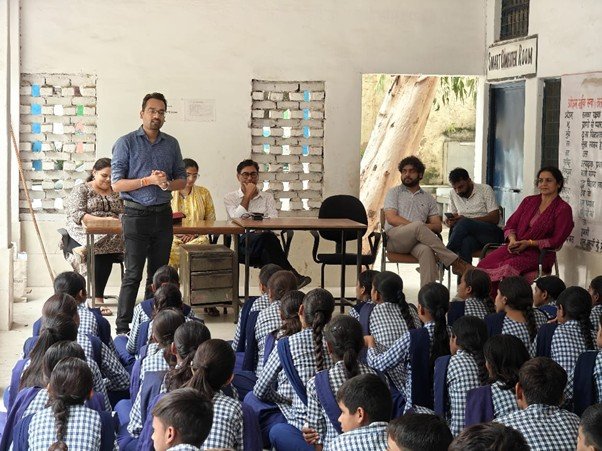
  2. Biodiversity & Wildlife: Expert sessions were delivered by Sankala team, focused on the importance of biodiversity and the Aravalli ecosystem. In an engaging session, Sankala team, introduced students to the concepts of human-wildlife coexistence, animal behaviour, habitat, and the critical issue of habitat loss.
Front like office staff along with other stakeholders attending the capacity building session organised at Bhondsi Nature Camp, Gurugram on 6 August 2025
An engaging session on biodiversity conservation and animal behaviour being conducted by team members from Sankala Foundation in GSSS Gaiuratpur bas, Gurugram Haryana on 5 August, 2025
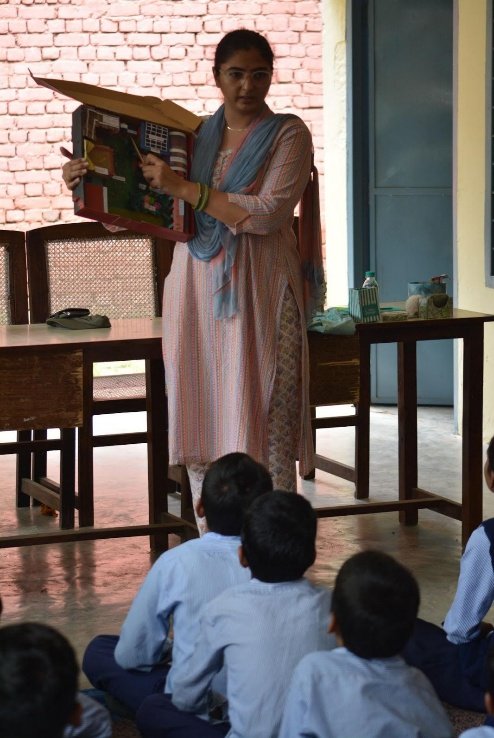
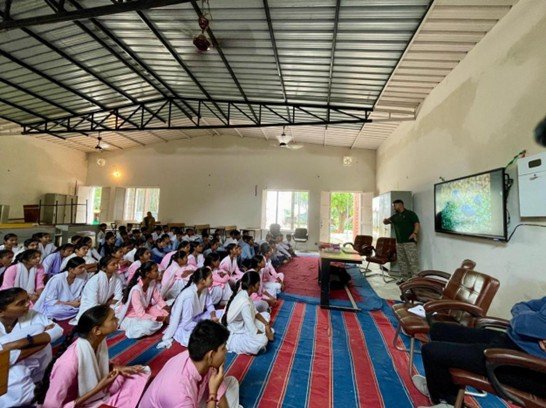
Session on Waste segregation, management and biomagnification being conducted by Sankala team in GSSS Sakatpur, Gurugram, Haryana on 4 August, 2025
  1. Waste Management & Sustainable Farming: The team also led a hands-on session on waste management. Using a specially designed waste management kit and a model of sustainable farming, educated students on topics such as biomagnification and bioaccumulation, the health hazards of improper waste disposal, and the practicalities of waste sorting.
  2. Mission LiFE: The Sankala team, delivered an engaging session on Mission LiFE, utilising vivid ‘show and tell’ placards to communicate the importance of sustainable practices in daily life.
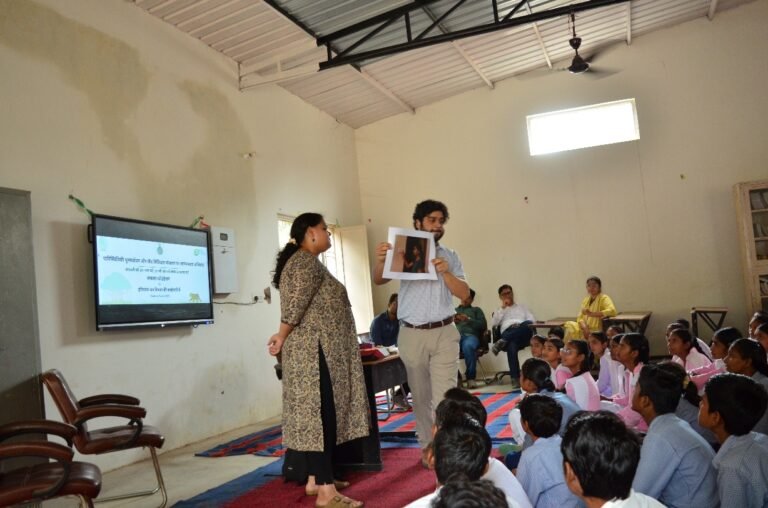
Session on Waste segregation, management and biomagnification being conducted by Sankala team in GSSS Sakatpur, Gurugram, Haryana on 4 August, 2025
To apply the knowledge gained, the theoretical sessions were followed by two key practical activities:
  1. Waste Segregation Activity: A cleanliness drive was conducted in each school, where students and volunteers were actively involved in the systematic clean-up and meticulous waste segregation using the skills taught in the session. This was followed by a formal pledge, which was organised to instil a sense of personal responsibility and duty for waste management and environmental stewardship among all participants.
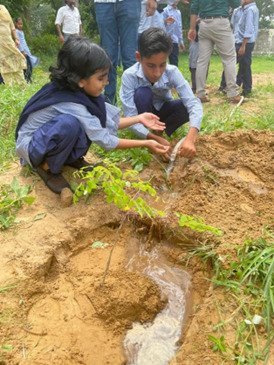
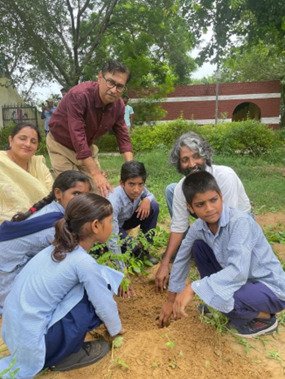
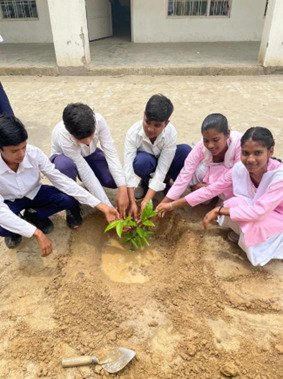
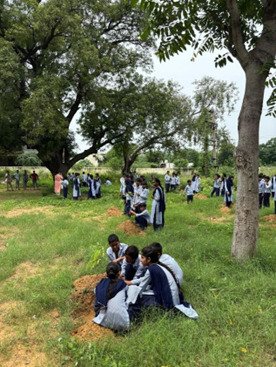
  2. Plantation Drive: A dedicated plantation drive was organised at a designated site. Here, indigenous saplings (e.g., Cassia fistula, Ficus species, Moringa sp. etc) were planted by students and volunteers. This initiative not only enhanced the local green cover but also introduced the concept of tree adoption, promoting a sense of ownership and long-term care.
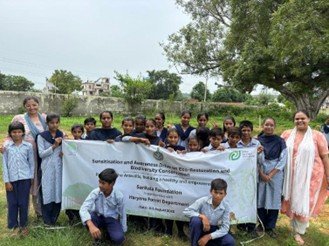
The workshops saw robust engagement from students, active participation from village residents, and strong collaboration with teachers and local community leaders. Approximately 100 volunteers from each school, totalling to over 400 participants, actively participated in the cleanliness and plantation drives.
This pilot intervention has provided invaluable insights and established a strong foundation for scaling up community-led environmental awareness and waste management initiatives across the broader Aravalli region. The positive engagement and initial measurable outcomes underscore the potential for transformative impact through continued, localised efforts.
Conclusion of the Awareness workshop at GMS Sakatpur, Gurugram school with a successful plantation drive on 4 August, 2025
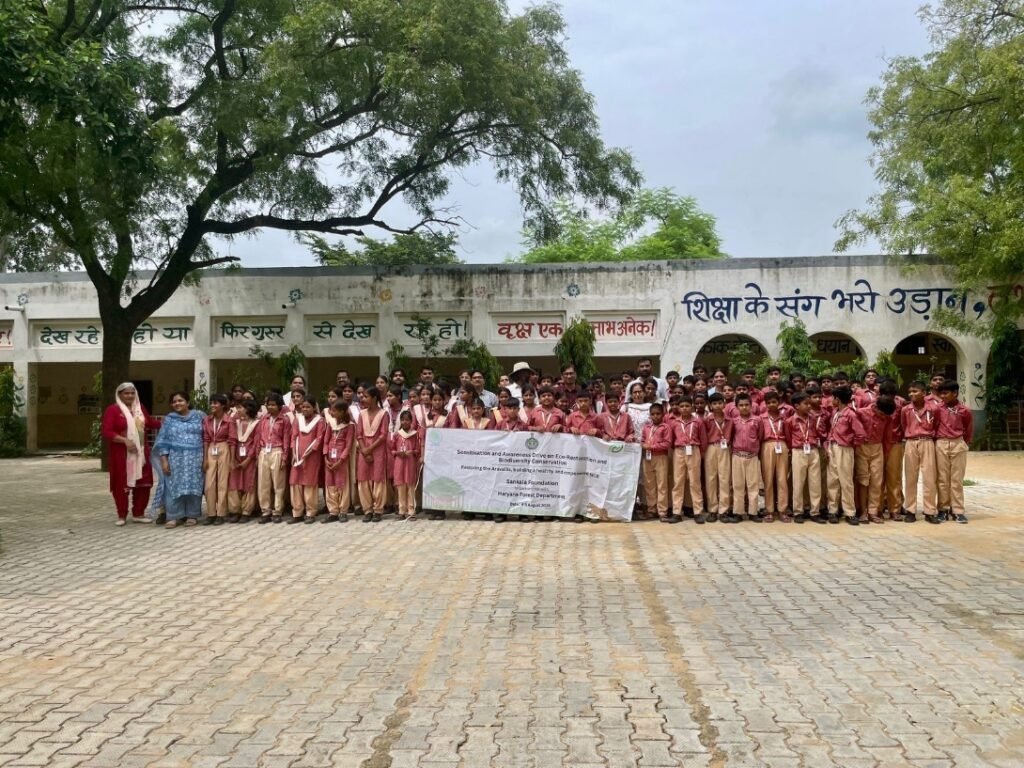
Conclusion of the Awareness workshop at GSSS Shikohpur, Gurugram on 4 August, 2025
Plantation and cleanliness drives in the pilot areas
Cart (0 items)